Note
Go to the end to download the full example code.
Conductivity in metals
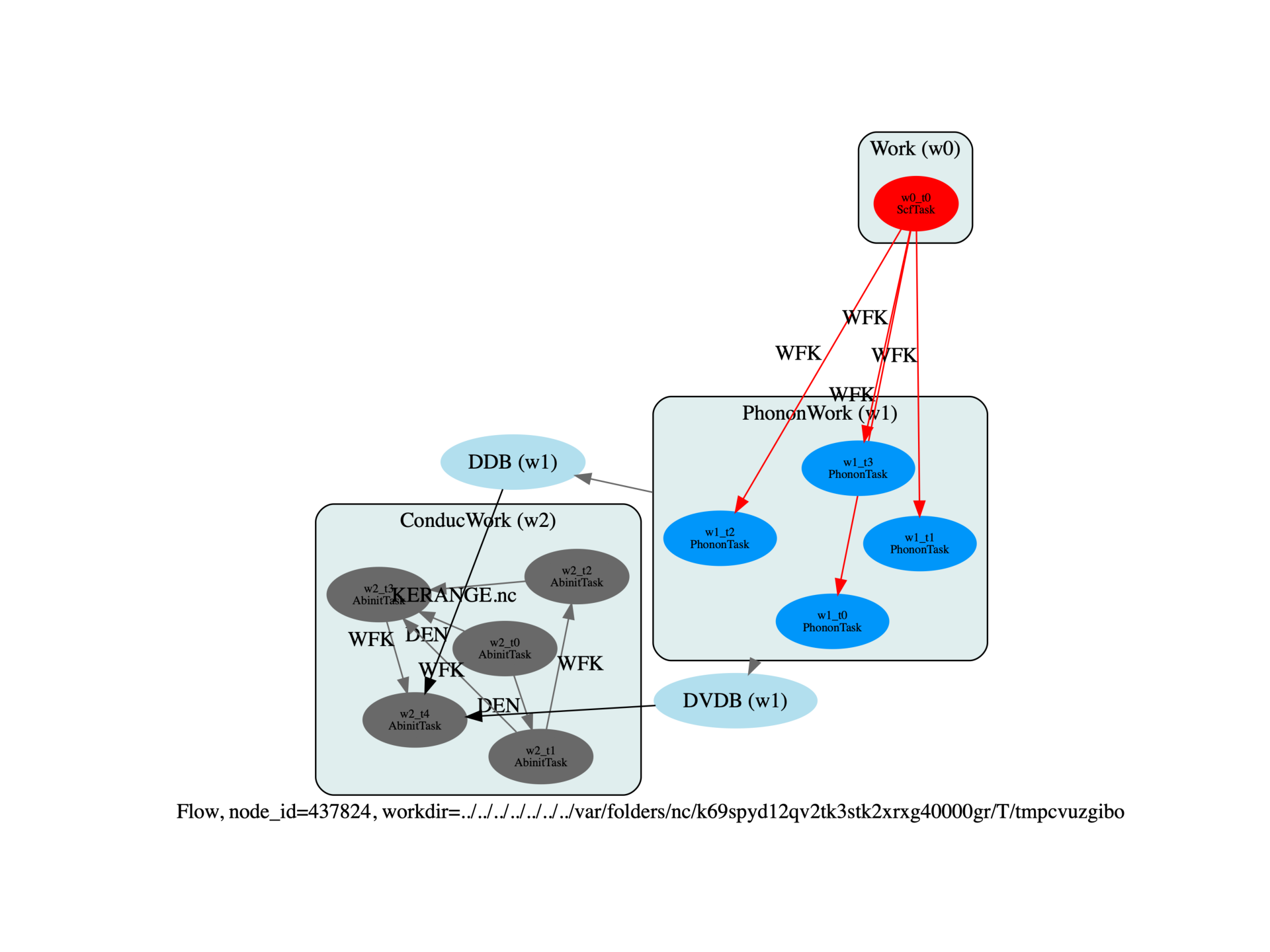
Flow to compute conductivity in metals.
import os
import sys

import abipy.data as abidata
from abipy import abilab, flowtk
from abipy.abio.factories import conduc_kerange_from_inputs


def make_scf_input(structure, pseudos, ngkpt=(2, 2, 2), shiftk=(0, 0, 0), **variables):
    """Build and return SCF input given the structure and pseudopotentials"""
    scf_inp = abilab.AbinitInput(structure, pseudos=pseudos)

    # Global variables
    scf_inp.set_vars(**variables)

    # Dataset 1 (GS run)
    scf_inp.set_kmesh(ngkpt=ngkpt, shiftk=shiftk)
    # scf_inp.set_vars(toldfe=1e-10)

    return scf_inp


def make_nscf_input(structure, pseudos, ngkpt=(2, 2, 2), shiftk=(0, 0, 0), **variables):
    """Build and return NSCF input given the structure and pseudopotentials"""
    scf_inp = abilab.AbinitInput(structure, pseudos=pseudos)

    # Global variables
    scf_inp.set_vars(**variables)

    # Dataset 1 (GS run)
    scf_inp.set_kmesh(ngkpt=ngkpt, shiftk=shiftk)
    scf_inp.set_vars(iscf=-2)

    return scf_inp


def build_flow(options):
    # Working directory (default is the name of the script with '.py' removed and "run_" replaced by "flow_")
    if not options.workdir:
        options.workdir = os.path.basename(__file__).replace(".py", "").replace("run_", "flow_")

    # Get structure and pseudos from the abipy database
    structure = abidata.structure_from_ucell("Al")
    pseudos = abidata.pseudos("13al.pspnc")

    # Variables
    variables = dict(ecut=20, tsmear=0.05, nband=12, nbdbuf=2, occopt=3, iomode=1, nstep=20)

    ngkpt = [4, 4, 4]
    ngkpt_fine = [8, 8, 8]
    shiftk = [0.0, 0.0, 0.0]
    ngqpt = [2, 2, 2]
    tmesh = [0, 30, 11]  # Conductivity at temp from 0K to 300K by increment of 30
    boxcutmin = 1.1
    mixprec = 1

    # Kerange Variables
    nbr_proc = 4
    ngqpt_fine = [16, 16, 16]  # The sigma_ngkpt grid must be divisible by the qpt grid
    sigma_ngkpt = [16, 16, 16]
    einterp = [1, 5, 0, 0]  # Star functions Interpolation
    sigma_erange = [-0.3, -0.3, "eV"]  # Negative value for metals

    flow = flowtk.Flow(workdir=options.workdir)

    # Create inputs
    scf_input = make_scf_input(structure, pseudos, tolvrs=1e-12, ngkpt=ngkpt, shiftk=shiftk, **variables)

    nscf_input = make_nscf_input(structure, pseudos, tolwfr=1e-18, ngkpt=ngkpt_fine, shiftk=shiftk, **variables)

    # Create Work Object
    # Work 0:  SCF run
    gs_work = flowtk.Work()
    gs_work.register_scf_task(scf_input)
    flow.register_work(gs_work)

    # Work 1: Compute DDB et DVDB
    ph_work = flowtk.PhononWork.from_scf_task(gs_work[0], qpoints=ngqpt, is_ngqpt=True, tolerance={"tolvrs": 1e-8})
    flow.register_work(ph_work)

    # Work 2: Conductivity with Kerange
    multi = conduc_kerange_from_inputs(
        scf_input=scf_input,
        nscf_input=nscf_input,
        tmesh=tmesh,
        ddb_ngqpt=ngqpt,
        eph_ngqpt_fine=ngqpt_fine,
        sigma_ngkpt=sigma_ngkpt,
        sigma_erange=sigma_erange,
        einterp=einterp,
        boxcutmin=boxcutmin,  # 1.1 is the default value of the function
        mixprec=mixprec,  # 1 is the default value of the function
    )

    # Here we can change multi to change the variable of a particular dataset

    conduc_work = flowtk.ConducWork.from_phwork(
        phwork=ph_work,  # Linking the DDB and DVDB via a PhononWork
        multi=multi,  # The multidataset object
        nbr_proc=nbr_proc,  # Needed to parallelize the calculation
        flow=flow,
        with_kerange=True,  # Using Kerange
        omp_nbr_thread=1,
    )  # 1 is the default value of the function

    # If you already have the DDB and DVDB, use from_filepath(ddb_path, dvdb_path, multi, ...) instead of from_phwork

    flow.register_work(conduc_work)

    return flow.allocate(use_smartio=True)


# This block generates the thumbnails in the Abipy gallery.
# You can safely REMOVE this part if you are using this script for production runs.
if os.getenv("READTHEDOCS", False):
    __name__ = None
    import tempfile

    options = flowtk.build_flow_main_parser().parse_args(["-w", tempfile.mkdtemp()])
    build_flow(options).graphviz_imshow()


@flowtk.flow_main
def main(options):
    """
    This is our main function that will be invoked by the script.
    flow_main is a decorator implementing the command line interface.
    Command line args are stored in `options`.
    """
    return build_flow(options)


if __name__ == "__main__":
    sys.exit(main())
Total running time of the script: (0 minutes 4.727 seconds)